
Soft Power and Selective Justice: Japan’s Postwar Reinvention and the Limits of Accountability in Liberal Democracies
Sophia Lu
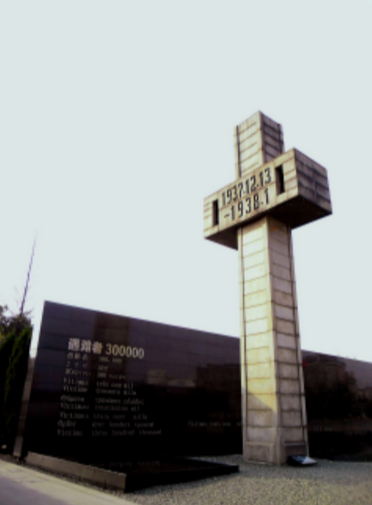
“The Nanjing Memorial Hall” - 董辰兴 | (Via: Wikipedia)
Japan’s global reputation today rests less on political memory than on cultural consumption. Pop culture, technology, and a “cute” cultural identity have shaped global perceptions of the country within the past half-century, producing an image of harmlessness that obscures how deliberately this transformation was constructed. Japan’s postwar rise as a beloved cultural exporter illustrates how consumer capitalism—reinforced by Western alignment—can silence historical violence, substituting accountability with aesthetics. While this rebranding has been economically and diplomatically effective, it has also come at the cost of historical reckoning, allowing past atrocities to recede beneath a surface of “harmless” consumer goods. This dynamic is not unique to Japan; it reflects how capitalist democracies broadly manage and
often minimize their violent pasts.
During the U.S.-led occupation of Japan from 1945 to 1952, the United States—despite nominal Allied involvement—exercised decisive authority under General Douglas MacArthur. Reconstruction efforts reshaped Japan’s political and economic institutions, emphasizing free-market capitalism, parliamentary democracy, and expanded civil rights. As Cold War priorities intensified, particularly during the Korean War, Japan’s industrial capacity was revitalized by supplying United Nations forces under U.S. protection. By the late twentieth century, Japan had emerged as a model democracy in Asia; not simply rebuilt, but strategically reoriented to serve Western geopolitical and economic interests.
This transformation did not appear haphazardly. It was the result of deliberate political choices made in the aftermath of World War II, when Japan’s defeat created both the necessity and the opportunity for reinvention. Pro-capitalist reconstruction redirected the country away from militarism and toward consumerism, the foundation for a national identity expressed through lifestyle branding, media, and global consumption. Over time, this strategy has functioned as a form of soft power, presenting Japan as culturally appealing yet politically neutral. In doing so, it has effectively distanced the modern state from its imperial past, replacing historical responsibility with a carefully cultivated image of apolitical innocence.
Japan’s postwar rebranding through capitalism also made its wartime atrocities easier to forget. Into The Murk: A recent history revisits the Tokyo trial, articulates how this process unfolded. The 1937 Nanjing Massacre and the horrors of Unit 731 evidently proved that
“brutality and sexual violence were endemic to Japan’s conquest of Asia”. The International Military Tribunal for the Far East (IMTFE) attempted to bring justice to these atrocities, yet it instead revealed the geopolitical priorities of Western democratic state interests. As later reporting showed, the US government actively hid its discovery of a biological weapons research center near Harbin, opting to protect implicated scientists from prosecution in exchange for their research data. Among those granted immunity by the United States was head scientist, Gen. Ishii Shiro, who oversaw “experiments (conducted) on thousands of prisoners” and the intentional “spread (of) plague, cholera, and anthrax through several Chinese cities.”
The selective accountability revealed by the Tokyo Trials creates concerning implications for global human security. When legal institutions are subordinated to geopolitical interests, mechanisms intended to deter mass violence instead reinforce what international relations scholars describe as selective enforcement within the liberal international order. The decision to shield figures such as Gen. Ishii Shiro reflects how hegemonic powers can instrumentalize international law, treating moral responsibility as conditional rather than universal. In this context, justice became a tool of power management rather than moral redress, signaling that human security protections could be suspended when they conflicted with the priorities and
alliance-building of state actors.
This precedent exposes how capitalist democracies, led by the United States, have leveraged both hard power and soft power to shape postwar stability while constraining mechanisms of justice. By prioritizing anti-communist containment and economic integration, hegemonic democracies elevated broader security objectives over human security, creating a hierarchy in which some victims remained politically expendable. Japan’s transformation into a culturally benign and politically neutral ally illustrates how soft power functions not only as influence, but as insurance, allowing states to project legitimacy while avoiding sustained
scrutiny of past violence.
The failure to fully prosecute wartime atrocities thus reflects a broader structural feature of the liberal democratic order, where capitalism, alliance politics, and normative authority combine to determine when justice is enforced and when it is deferred. In Japan’s case, the United States and its allies prioritized economic reintegration, market stability, and containment of communism over full reckoning with wartime violence. Democracy and capitalism were deployed as tools: a pacified, economically productive Japan could serve as a reliable Cold War ally while projecting the image of a liberal, law-abiding state. The strategic benefits of stability and alignment outweighed moral imperatives, demonstrating how even nations that champion human rights can manipulate systems of justice and memory to serve geopolitical and economic
goals.


Comments